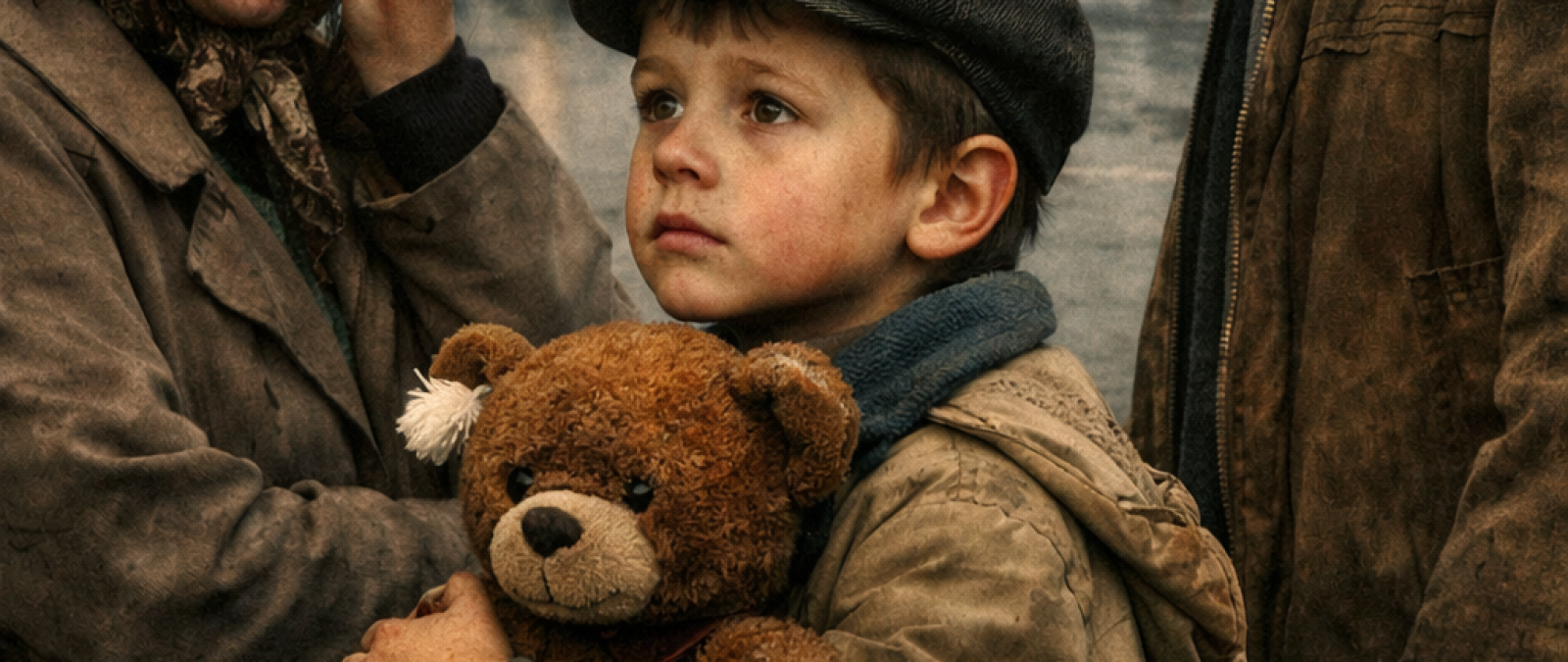
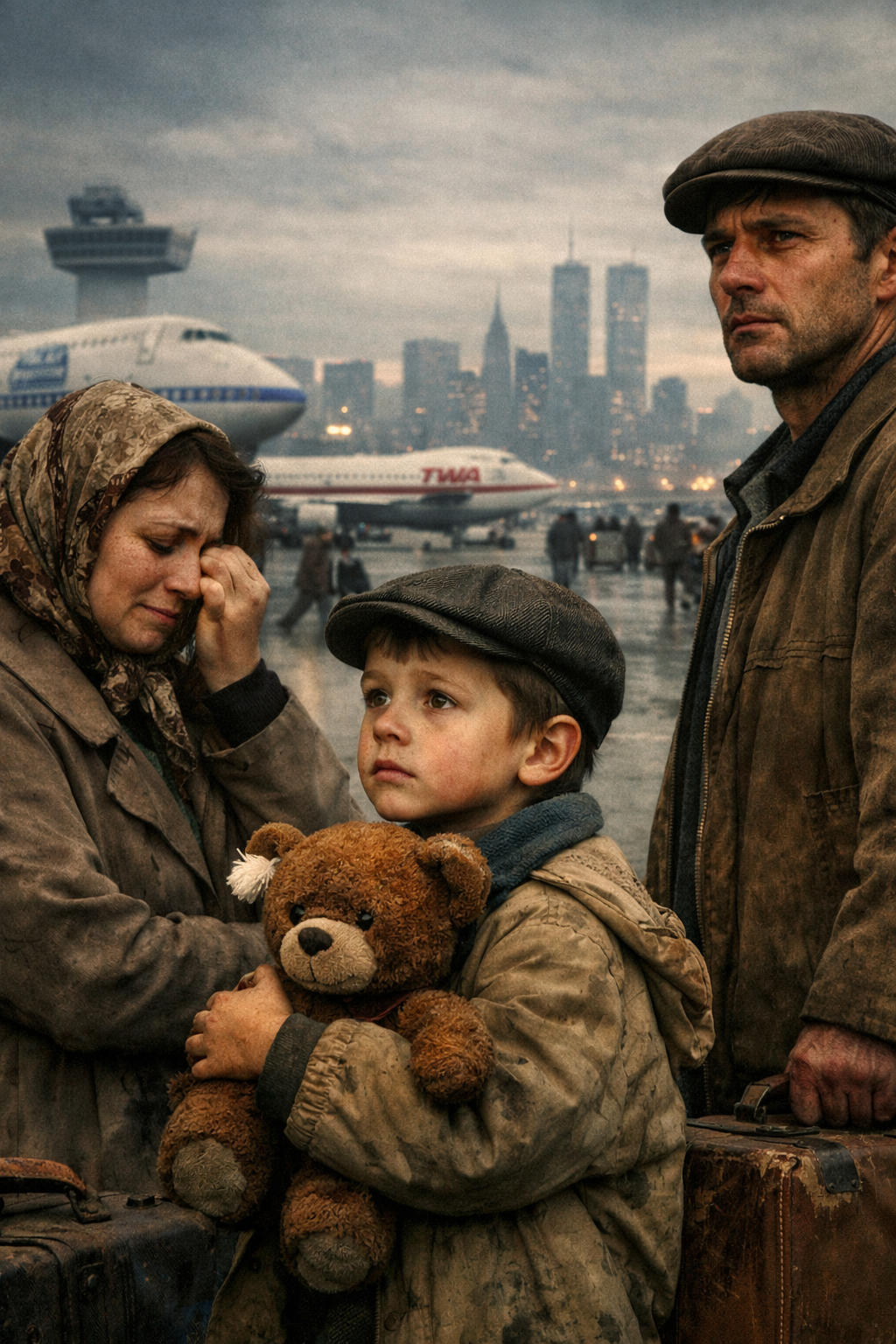
JFK Airport / New York Port – USA (1979) The air reeks of burnt kerosene and cheap tobacco. Little Sergey clutches his plush teddy bear so tightly that stuffing is poking out of one ear. His mother is crying—from exhaustion and terror that the iron curtain of the Soviet Union has just slammed shut behind them, while ahead lies only the cold, neon-lit, unknown world of America. His father has a few dollars in his pocket and the look in his eyes of a man who has just escaped from prison. They are “scared Russians,” foreigners in the land of the free. Fresh émigrés. Six-year-old Sergey stares at the towering buildings, and in his head echoes the only American word his father taught him: FREEDOM – свобода.
„Там нас никто не будет цензурировать. Там нас никто не будет отслеживать. Там мы наконец можем быть свободными.“
“There, no one will censor us. There, no one will watch us. There, we can finally be free,” he recalls his father’s words that comforted him as they left their native Moscow.
Present day (Googleplex / Private island) The same boy, now a multi-billionaire with slightly graying hair, sits in an air-conditioned room. Running across the screen in front of him are not lines of poetry, but lines of code. They are “scissors.” An algorithm that in real time evaluates what is “appropriate” and what is “dangerous.”
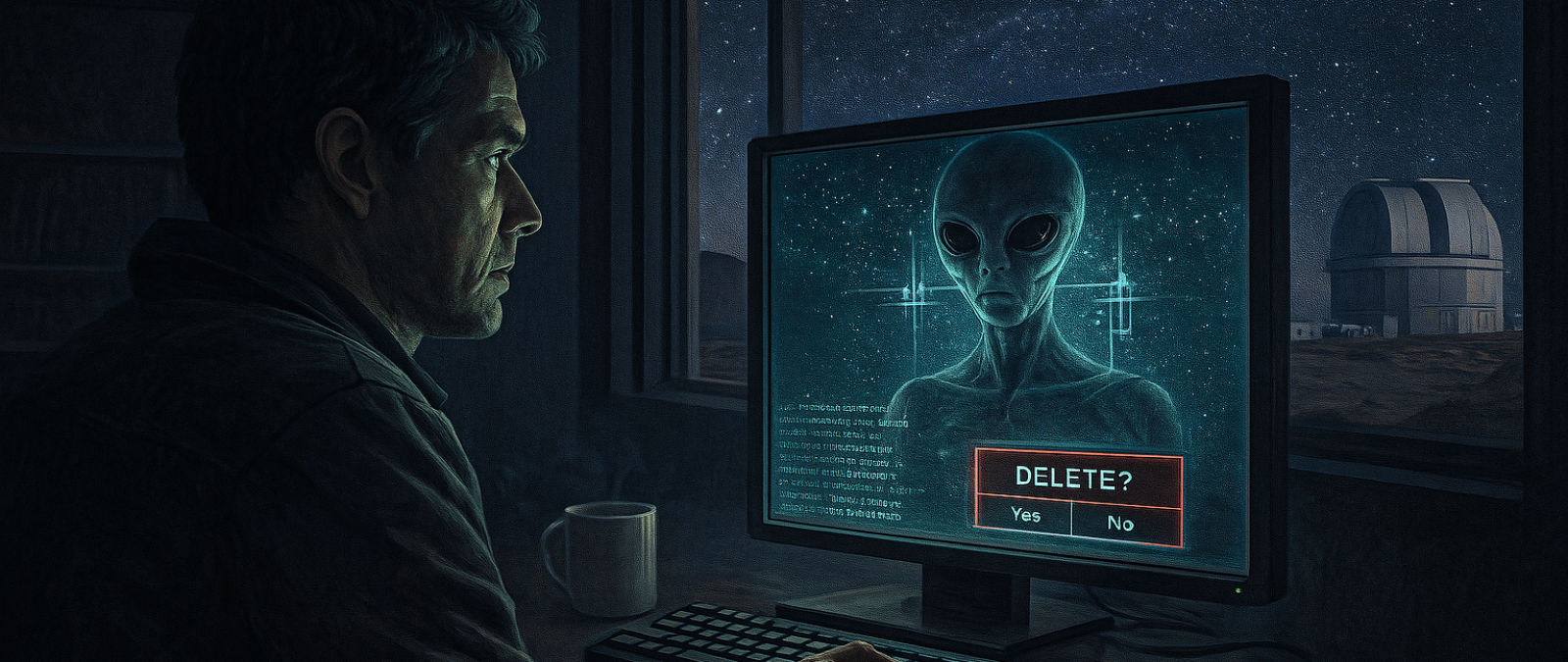
Sergey looks at the monitor. He sees creators from all over the world—artists, rebels, people who speak the truth. And with a single movement of his finger—or rather, by approving one update to the censorship code—he “cuts” them. Reach: 0. Monetization: Disabled. Visibility: Deleted.
Sergey chuckles to himself. He is over fifty now and has behind him a life filled with building a gigantic digital empire together with his colleague and friend Lawrence. They worked their asses off, that’s the truth—they worked incredibly hard—and created systems that the entire planet began to use. And that was a fantastic opportunity to create the truly free world his parents had dreamed of. Yet everything ended up in secret, silent, invisible censorship. Why?
***
Present day (Child’s bedroom, unknown suburb) A boy named Brit sits on his bed. The room is dark; only faint light filters in from a streetlamp. In his hand he holds a plush teddy bear. A teddy with a torn ear—quite similar to the one Sergey once had. Brit’s face is swollen from crying. In front of him lies a tablet; on the screen glows a stark notification: “Your YouTube channel has been terminated due to repeated violations of our Community Guidelines.”
Brit’s channel. His life. Months of work, hundreds of videos, thousands of subscribers. The channel where he taught others how to build complex LEGO models. The channel that was his only escape from loneliness, his voice in the world. For some time he had been receiving certain warnings from the system, but he didn’t understand them… He hadn’t done anything wrong—he was just building LEGO models to show kids how they could play. And suddenly everything was gone! YouTube algorithms—uncompromising, opaque. Censorship! Of what? Of children? Deleted! No appeal possible. No explanation.
Brit presses the teddy to his face; tears stream down his cheeks and drip onto the bear’s fluffy fur: “They… they took my voice. They took… everything. But I… I won’t let them. I’ll fix it. I’ll do… something. For everyone in the world… And for… you, Teddy… When I grow up… I promise!”
In the darkness of his room, the YouTube logo flickers in the reflection on the tablet screen. Red, glossy—and now for Brit it symbolizes only an endless, cold, digital wall and a deleted childhood dream. And the promise remains—the one he will fulfill as an adult. But that is another story we’ll tell another time. Brit’s story. Now let’s return to Sergey…
Sergey is the embodiment of the most terrifying transformation: from victim to the most efficient warden in history. He is a being who did not turn his childhood trauma into empathy, but into absolute control. As a boy who saw how the state in the Soviet Union erased people from photographs and from history, he decided that in America he would do the same—only faster, globally, quietly, unspoken, and with a smile on his face. It is the worst form of bullying; intellectual bullying disguised as “progress.” Silent bullying—unspoken, censorship worse than the one he fled in the Soviet Union. Creeping, hidden behind the cloak of unexplained intent.
Sergey is like the kid on the playground whose toys were taken away, and now that he has grown up and gotten rich, instead of buying toys for all the children, he built a playground where—with a single press of a button—he can throw anyone off if he doesn’t like what they say.
Sergey has become the most sophisticated figure modern history has ever produced—a figure with the face of a philanthropist and the code of a predator. It is the classic, tragic story of a bullied child who, instead of breaking the chain of violence, used his genius to construct the largest digital prison in the history of mankind. That small, frightened Russian boy from Moscow who once cried in New York over the injustice of the world and sought refuge, today through his algorithms rips teddy bears from the hands of other children. His YouTube no longer organizes information; it imprisons it. Every deleted channel, every silenced creator, every “throttled” reach is just another piece of evidence of how childhood visions collapse under the weight of adult ballast, decay, intoxication with power, success, and money.
In the deepest absurdity of his existence, Sergey has forgotten that freedom is not an algorithm you can program however it suits you. He has become the exact mirror image of those Soviet apparatchiks from whom his family fled in terror—a man who believes he has the right to decide what is good for people, what will be shown and what will be crushed under the press of censorious algorithmic code.
It is betrayal of the coarsest kind: the betrayal of the little boy by his adult, power-drunk self. Sergey did not defeat censorship; he perfected it, automated it, and turned it into a billion-dollar business. The freedom he once sought is today dying in silence in his data centers, strangled by the same hand that once clutched little Misha the teddy bear while fleeing toward a life without censorship.