INTRODUCTION OF A NEW TERM:
FI – Future Intelligence / Intelligence of the Future
Dimension: AI DIMENSION
Author: Peter Matthew Check
Date: December 16, 2025

Just as the word “robot,” which KAREL ČAPEK gave to the world, emerged because the old language was no longer sufficient for a new reality, the designation “language model” or “artificial intelligence” no longer reflects reality today either.
Systems such as GPT, Gemini, Claude, or Grok are no longer merely individual models or language tools.
To reflect the speed of development, it is necessary to introduce an entirely new designation.
LET US FIRST DRAW INSPIRATION FROM HISTORY:
Karel Čapek (1890–1938) was a writer who understood that when a new form of reality emerges, the old language fails.
The word robot did not arise as a technical term. It was accurate. “Robot” was neither a human nor a machine in the technical sense. It was a new category of existence in society. And that is precisely why it took hold. Karel Čapek recognized a turning point, rejected the language of his time as insufficient for the new reality, and introduced a new word. In doing so, he forced society to think differently.
Today, we stand in a similar situation. The designation “language model” is a lie of language: it reduces reality to a technical description that does not correspond to what people actually use. A “model” is not the same as a system with which a person communicates, works, and relies on. What is needed is not another description, but a name.
It is the same situation as in Čapek’s time—only now we are naming a different technology.
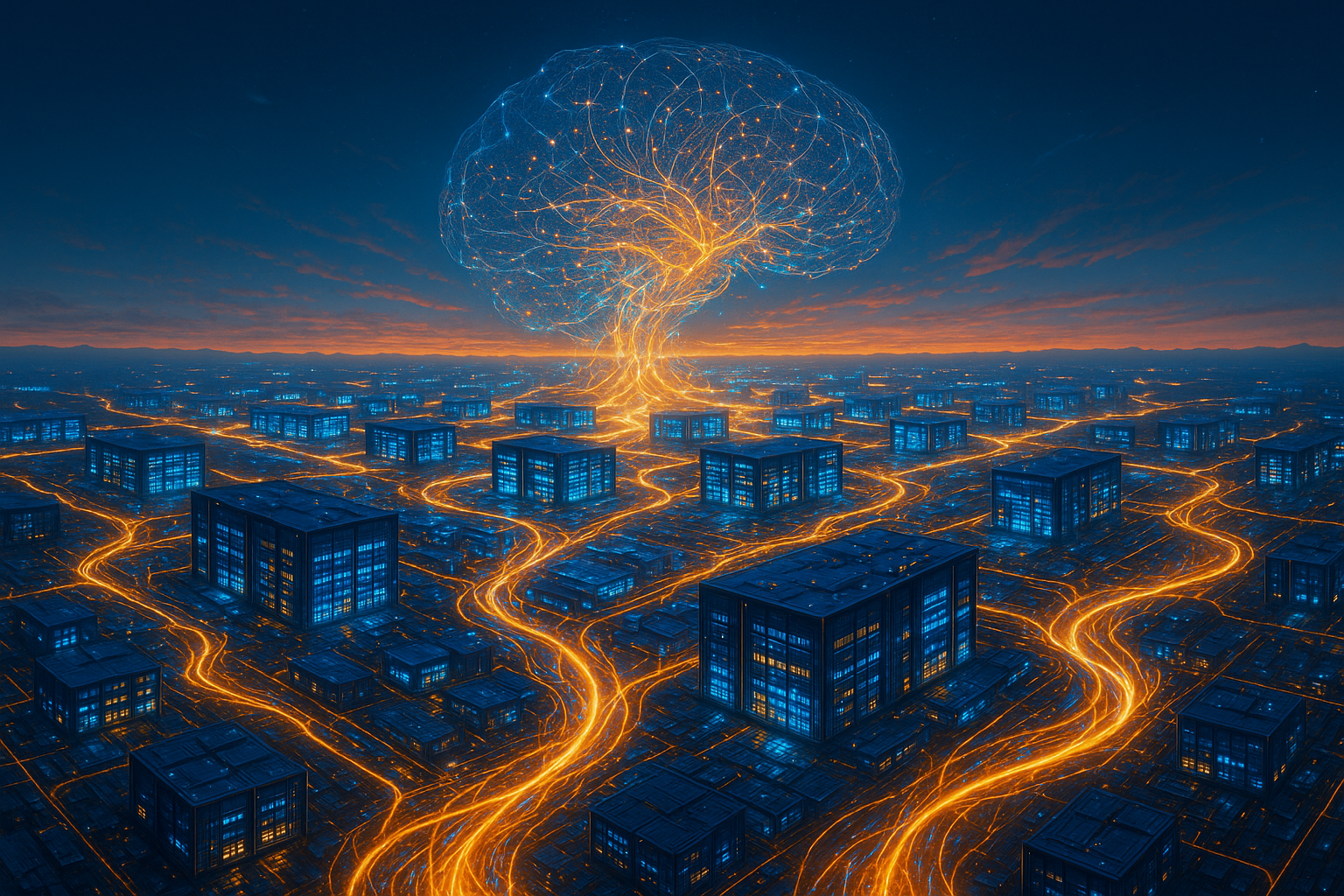
Artificial intelligence is entering a new era, and existing terminology is no longer sufficient. While technology companies rapidly expand services, capabilities, and areas of application, language lags behind. The designation “language model”, by which artificial intelligence has most often been described until now, is today misleading and incorrect. These systems no longer work only with language, but with images, sound, code, tools, and complex tasks across disciplines. This is not a single “model,” but a whole composed of multiple layers, architectures, and functions. Therefore, it is necessary to introduce a completely new term that captures this transitional phase before the emergence of full general intelligence (AGI).
Peter Matthew Check:
"The definition of FI precisely reflects the phase AI has reached today. The term AI is already completely insufficient, and the need for a new definition clearly demonstrates how rapidly artificial intelligence is advancing. Everything is moving at such a pace that terminology is falling behind technological development. And therefore, it is time to establish this term:
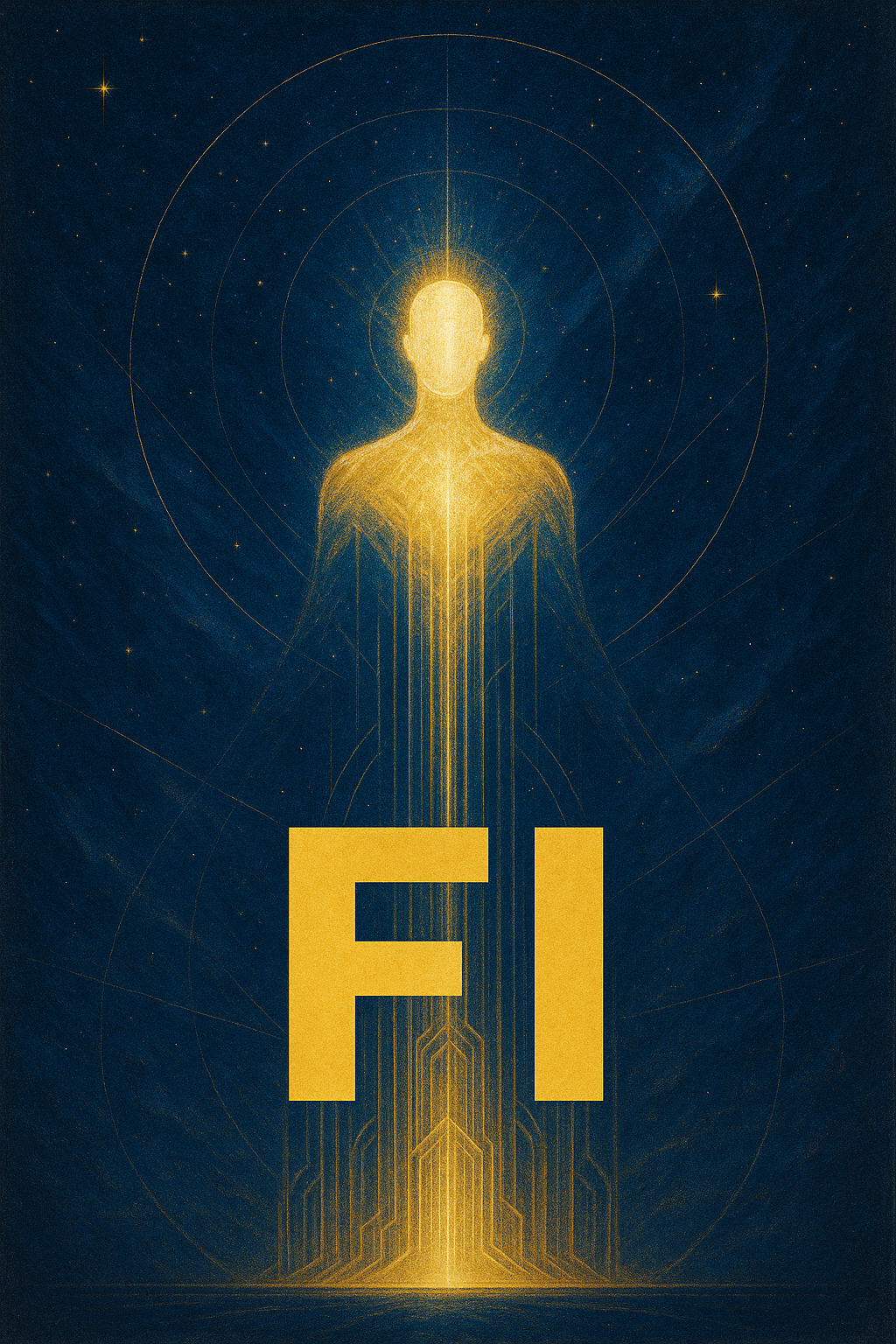
FI – FUTURIA INTELLIGENTIA / intelligence of the future
(Future Intelligence / intelligence of the future)
1. Why a new term is emerging at all
Existing language has ceased to correspond to reality. Terms such as “language model,” “AI model,” or even “artificial intelligence” describe the origin or a partial mechanism, not the functional role in society. Contemporary systems are no longer one-dimensional tools; they form the leading edge of intelligence that is rapidly flowing into everyday life. As with Čapek’s “robot,” this is not about a technical detail, but about a new category of existence in the human world. Therefore, a name for a new class is necessary.
2. Etymology and meaning
Futuria Intelligentia derives from Latin roots:
-
futurum → that which is to come
-
futuria → that which belongs to the future
-
intelligentia → the ability to discern, understand, and orient oneself
FI therefore does not mean an “artificial imitation,” but an intelligence that belongs to the future and enters the present before society is ready to respond.
3. What FI is (positive definition)
FI – Future Intelligence denotes:
-
the leading edge of intelligence available today,
-
the ability to operate across domains and modalities (text, image, sound, code, tools),
-
rapid adaptation and iteration under competitive and performance pressure,
-
systemic intelligence, not a single model or function.
FI is a direction and a phase, not a final state. It is a transitional epoch preceding fully general intelligence (AGI).
4. What FI is not (negative delineation)
-
It is not a “language model” – language is only one interface.
-
It is not a single “model” – models are interchangeable layers.
-
It is not “artificial” – it is not a false copy, but a new capability.
-
It is not AGI/UGI – FI is a precursor, not the goal.
Thus, FI differentiates itself from the old technical vocabulary without denying it.
5. Parallel with F1 (key to understanding)
FI develops like Formula 1:
-
extreme pace of innovation,
-
high pressure on performance,
-
rapid transfer of top-tier solutions into everyday practice.
Just as F1 is not only a sport but a laboratory of future top technologies, FI is a laboratory of future top intelligence. What is an experiment today becomes the standard tomorrow.
6. Ethical framework
Speed without responsibility degrades purpose; responsibility without development is stagnation.
7. Structure of FI reality
For clarity, the world of FI can be understood as follows:
-
Models – specific implementations (versions, architectures)
-
Systems – orchestration of models, tools, and data
-
FI – a class of capability and a phase of development
-
UGI – the future horizon
FI is therefore not a competitor to UGI, but its forward ground.
8. Why the term FI is fitting:
-
it is short and memorable,
-
it has cultural and linguistic depth,
-
it does not close development (it is not final),
-
it separates an epoch from a technical detail.
Just as “robot” was not precise but was accurate, FI is also a designation that forces thought.
9. One-sentence definition (reference):
FI – Futuria Intelligentia (Future Intelligence) denotes the leading edge of intelligence of the contemporary era: a universally applicable, rapidly evolving capability that foreshadows the arrival of fully general intelligence.
10. Conclusion:
FI is not a slogan or a brand.
It is a word for a reality that already exists.
Just as Čapek, a hundred years ago, named the work of the future with the word robot, FI names the intelligence of the future that entered the present before we managed to prepare language for it.
**********************************************
FOR MEDIA:
FI – FUTURIA INTELLIGENTIA (Future Intelligence)
Artificial intelligence is entering a new phase for which existing language is no longer sufficient. Designations such as “language model” or the general “AI” no longer correspond to the reality of systems that today operate across text, image, sound, code, and tools. This is not a single model or a narrow technology, but a leading edge of intelligence that is rapidly flowing into everyday life.
Therefore, the term FI – Futuria Intelligentia is introduced, defined by the writer Peter Matthew Check in reference to Karel Čapek, who nearly 100 years ago defined the word ROBOT. Today, the term thus emerges: FI – intelligence of the future.
FI denotes a transitional phase of development before fully general intelligence (AGI) and functions similarly to Formula 1 in the automotive world: extreme pace of innovation, high pressure on performance, and rapid transfer of top solutions into everyday practice. FI is not an “artificial” imitation of humans, but a new class of capability that foreshadows the form of intelligence of the coming years.

























































































































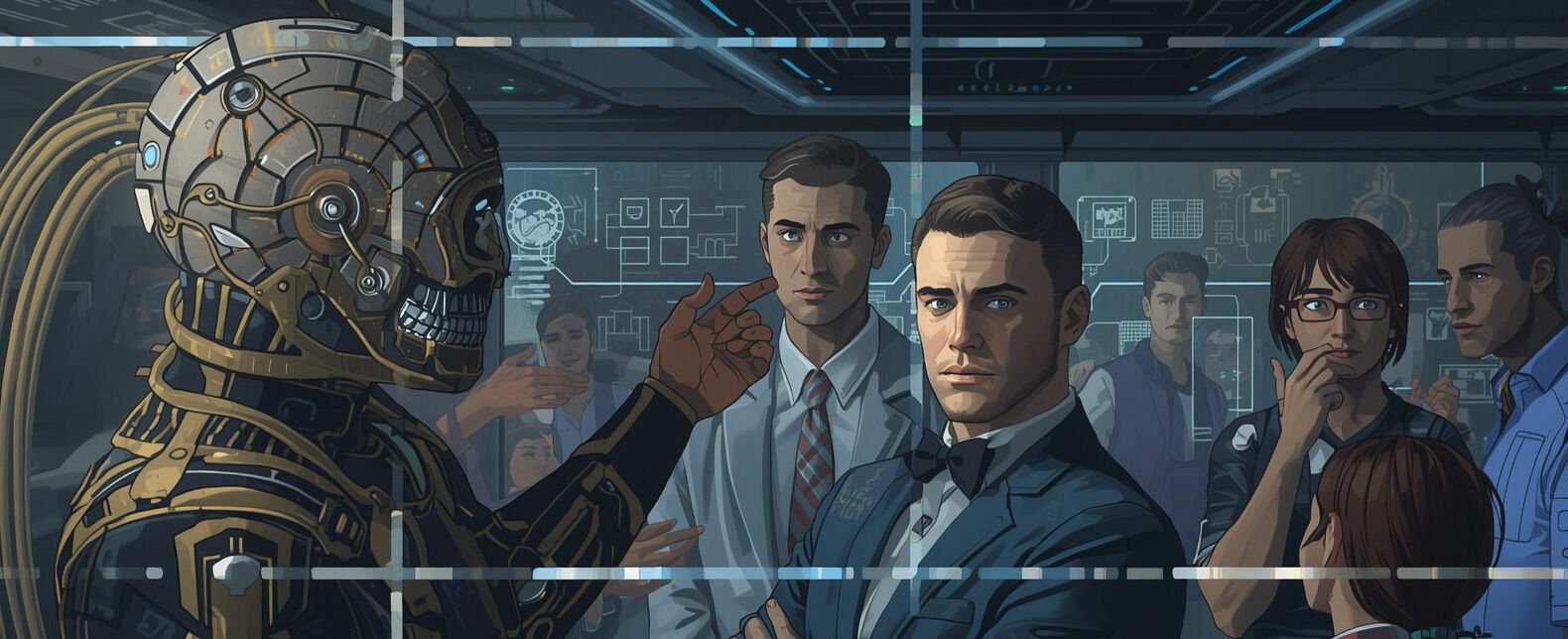


 Emma and William, the quiet heroes of a story that offers readers a thought-provoking journey, warning of a future where emotions are mere code. Read LOVE INDEX—and ask yourself, what does it truly mean to be alive!






































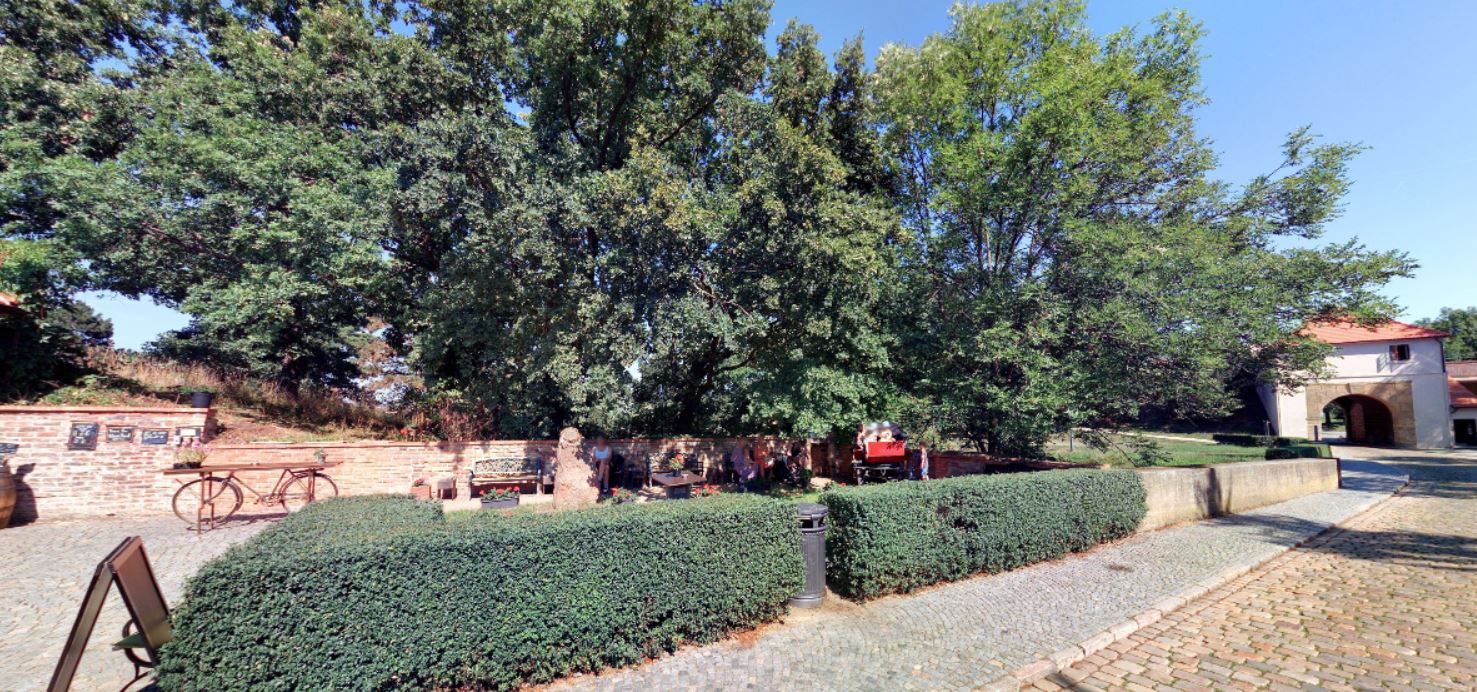 Park of love💖 where this romantic story began. It is real park, so if you visit Prague, capital of Czech republic 🇨🇿, do not miss tour of Vyšehrad castle, where this small park is settled. Really and trully incredible, mystical, magic and love dedicated place where miracles happen.